“Get You In, Get You Out, and Get You Employed”
Career Schools & Career Colleges
(Also Including Stand-Alone Licensing, Certifications, Direct-to-Employer Training)
In this section we've got 3 of the MOST VALUABLE Career Education Options
*The Common Theme with All: Much Shorter Paths to Professional Careers
(most are fairly high in Demand with mid-to-upper levels of Income)
*Some can be as short as 6 months while others can be 2 years or so.
Keep an open mind and see the pics above and throughout this page---these are SOME TREMENDOUS OPTIONS.
Here is what we'll cover:
1. Career Colleges (Mostly 2-year Professional Associate Degrees)
2. Career Schools (Mostly Diploma & Certification Programs for Various Professional Careers)
3. Licensing & Certification Only Options - Very Specific Professional Schools and/or Initial Training----but most
require no traditional College classes.
We've got plenty of Career examples to help highlight additional options worth considering----
BEFORE BLOWING 100k-200k at "XYZ Football University" if these are a better fit
*You will be SHOCKED when you see SEVERAL High-Profile Careers earning 100k+ that you would swear
need a Bachelor's that don't even require ANY FORMAL COLLEGE!
*You'll also be surprised by the Career Fields that REALLY ONLY REQUIRE an Associate Degree, yet we continue to
send students out to the $100k-$200k Campus-Based Public & Private Universities for a 4-year Degree
in these fields for no reasons beyond "We didn't know" or "They wanted the Full College Experience" (cringe).
Are You Ready to change your Paradigm? Let's get Started
So, first things first....when we initially laid this page out, we were going to put the "Licensing & Cerification Only" section last. It's the logical position since this is just a sub-section of "Career Schools". But the more we kicked it around; we realized this might make a better splash---thus getting you thinking in the right direction.
That said---- we're gonna start with the LICENSING & CERTIFICATION ONLY options---just to show you Career opportunities available WITH NO COLLEGE, nor Official "Career School". These are often taught by Specialized Schools essentially offering ONE PROFESSION (or perhaps a couple related)----while others may just be short licensing/certification programs offered at local training centers or community colleges. In some cases, they can even be self-paced individual training online.
*Several of these can yield $100k+ right out of the gate, while ALL HAVE THE ABILITY TO GET THERE. You ready?
"License & Certification Only" Careers - THE 100k Club
NOTE: With a number of these Programs, you have specialized training first, and then a set of benchmarks/levels to meet "on the job" or via "follow-on-training". These steps will get you to your ultimate goal over time. Others require you to work under a company, or individuals licensed at a higher-level for a set period of time. But based on the data and my experience dealing with individuals in these professions, high level pay is certainly available within a year or 2 of the completion of training.
And perhaps the 2nd best part---you took NO GENENERAL EDUCATION COURSES, nor were you forced to take elective courses covering totally useless stuff for you in the long run. Maybe it's for you----maybe not. But we'll do our job and get you "VISUALIZING" options other than your standard Traditional College.
Of course, there are many more of these "License" or "Certification Only" Careers that vary in demand & income levels but are extremely popular like Fire Fighter, EMT, Law Enforcement, Home Health Aid, Cosmetologist, or Forklift Operator just to name a few in various fields. Simply put---there are tons of options out there that involve very specific training to get you licensed and working. We'll get to more similar stuff (Certification & Diploma Programs) when we discuss traditional Career Schools here in a few. But first, let's look at "Career Colleges"---which are kinda the Degree Awarding "big-brothers" of Career Schools.
*Commercial Pilot
*Investment Advisor
*Air Traffic Controller
*Court Reporter
*Private Investigator
*Electrician, Plumber, HVAC, Welding etc...
*Fire Inspector
*Recruiter / Headhunter
*Home Inspector
*Insurance Sales Agent
*Real Estate Professional
*Contractor
*Home Appraiser
*Commercial Truck Driver


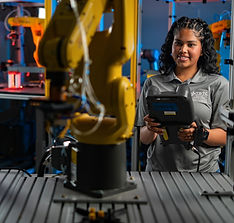
So What are Career Colleges?
Generally, these are Schools that offer 2-Year Professional Degrees (often called "Applied" Associate Degrees) that can usually be started right away with little waiting. It’s all about Speed and Employment. Since most are year-round with at least 4-5 terms per year (day or night in many cases)---they can get people in and out with that degree in 18-21 months---even if you don't use any of the strategies we outlined under "Speed to Degree".
These days, a lot are now offering Bachelor’s programs as well (thus blurring the lines further between other “School Types” out there). However, many of these Bachelor’s Programs are Leadership or Management focused mostly RELATED TO THAT SAME FIELD, thus helping the "now working" ASSOCIATE DEGREE GRAD prepare for the next step in their Career.
So, what are the types of Degrees you might expect to find at Career Colleges?
*Generally, they are MOSTLY focused on those with a good bit of demand and higher average salaries.
*They also try to find competitive niches missed by the Big Universities.
*They’ll sometimes use flashier or more specific names----or just provide shorter paths to get to work.
"Career College" Degree Majors examples:
(and nearly all are Associate Degrees offered NOW at various locations)
*Technology related: Cyber Security, IT, Software Development, Video Game Design, Networking, Artificial Intelligence, Cloud Computing, Electronics Engineering Tech, Applied Engineering, Robotics, Drafting & Design etc…
*Government/Law related: Corrections & Rehab, Homeland Security, Criminal or Private Investigations, Emergency Management, Arson Investigation, Social Services, Fire Science/Firefighter, Crime Scene Technology etc…
*Healthcare: RN, Surgical Tech, Anesthesia Tech, HC Administration, Dental Hygienist, Radiological Tech, Sonographer, Occupational Therapy, MRI Tech, Respiratory Therapy, Pharmacy Tech, Medical Lab Tech etc...
*Specific Management/Entrepreneurial: Project Management, Construction Management, Golf Management, Non-Profit Management, Real Estate, E-Commerce, Human Resources and Organizational Leadership, Entrepreneurship, Supply Chain & Logistics Management etc...
*Note: Some of the above Associate Degrees are offered by Accelerated-Career Universities that award Undergrad & Graduate Level Degrees as well. We'll hit them shortly in the Private Universities section...
But Here’s The Key Thing, & Major Reason you might
consider one of these Schools (other than Speed/Career Focus)
The Career Service Depts & Their Accountability
**Career Services at most Career Colleges & Schools are far different than what you typically see. We’re talking---they’re out recruiting Companies; setting up your interviews; doing mock interviews; resume preparation; and getting follow-up feedback from the employer after the interview (kinda like “an Agent”)
**If they don’t maintain JOB PLACEMENT Numbers at certain percentages, they can lose accreditation for teaching that program. So, they are REALLY MOTIVATED. Depending on which Accrediting Body they’re set up with, this might equal a requirement of 65-80% MINIMUM
“Employed in a Field Related to their Degree” within 6 months. UNLIKE OTHER SCHOOLs these numbers ARE REPORTED and VERIFIED following each graduating group (so usually 4 times per year for most schools in this category).
Fall below that---and here comes PROGRAM PROBATION…
NOTE: Now compare this to the Public Colleges "claiming" 90%+ Job Placement #'s". (Basically, a Marketing Statistic---we'll get to that)
*Remember 54% "Don't Work in their Degree Field" ---findings from NSCG - Part of the US Census Bureau (actually it says 46% do)
*Remember 45% of Grads are "Underemployed" 10 years later---meaning in jobs not requiring their Bachelor's Degrees - Strada Inst.
*And here's a NEW ONE: Linkedin estimates only 27%-40% of Grads work in jobs directly related to their degree a decade later
So, as compared to the 65%-80% MINIMUM required (AND REPORTED) by these Career Colleges (within SIX MONTHS) that is a huge difference. But how do these Universities and Colleges get their # of 90%+. It's Pretty Simple---they may be:
-Only using data of Internal surveys
-Using surveys just from those who responded with no effort to reach out to others
-Loose Parameters of what "working in the field or one related to it" means----or they just say "working" in general
-No set verification required or reported to an Accrediting Body (for school percentages and/or for program percentages)
So there you have it...take it for what it's worth...


So, are All Career Colleges Set Up the Same Way?
Most are fairly similar. Let's touch on their general characteristics first, then take a brief look at other schools operating in somewhat the same manner (but with KEY differences).
1. In the Most Traditional Sense, Career Colleges are typically focused on Professional Associate Degrees, Diplomas, and Certification Programs---so basically the shorter-term stuff. They have historically been associated with the following things:
*Focus on Career, Speed to Graduation, Professional & Current Training, Employer Contacts, & Career Services Differentiation
*Year Round Classes
*New Terms starting every few weeks---with very little waiting even for programs like RN
*Internships or Externships Day or Night for Many Programs
*Posted Pass Rates for Certifications or Licensing-often higher (ex.'s in Healthcare - RN, Sonography, Radiography, Anesthesia Tech, Surgical Tech)
*Industry Current Equipment & more of it in some cases
*Lower Student Populations, typically with Smaller Class Sizes
*A little better Customer Service and Accessibility to Academic Leaders, Career Services, FA, & Admissions
*Hands-on Training - Specialties that require less "typical" Classroom time (with significant time allocated to Practical Training).
NOTE: As mentioned elsewhere, some have now added limited Bachelor's Programs and Online Options to improve revenue and to remain competitive and relevant. Many of those degrees are specific Leadership, Management, or Administrator focused---and are designed to help these Associate Degree Grads take their Career to the next-level.
2. Other Institutions that are close---but yet different.
*Most of these are what we've deemed Private Accelerated-Career Universities, which have many similarities---but a few key differences.
*Many of the Basic Characteristics shown above apply to them---but there a few things that set them apart (good or bad):
*Their mix of Programs includes a GREATER percentage of Bachelor's Degree Options (and fewer of the shorter-term programs).
*They've added a good bit of Online Degrees---in all types of fields. So now they're trying to compete w/ the Big Online-Driven Univ.'s
*They've positioned themselves as Career-Focused Colleges offering Bachelor's Degrees in 2.5 years, which of course, gives them a competitive advantage in that category vs. the standard Campus-Based Public and Private Universities.
*Many are now awarding Graduate Level Degrees
*Now---will they have VERIFIED minimum "Job Placement" standards for the School and/or Certain Programs? Maybe.
In the majority of cases their COLLEGE will not be under an Accrediting Body that requires the same level of monitoring and
follow-up, however, they may have "Programmatic Accreditation" for certain majors. In these cases you may see something a little more in line with a TRADITIONAL Career College.
*The KEY DIFFERENCE with these Institutions is they have significantly blurred the lines with several of our other "8 Types of Schools". Is that good? It just depends. Some are still very "focused" Career one-stop-shops, while a couple might have expanded the menu a bit too far---not totally unlike The Cheesecake Factory. It all looks good "on paper", but it's tough to keep the same high-level quality across all areas.
Note: We'll have plenty more on these Accelerated-Career Universities when we talk "Private Universities" in another section.
So then, what exactly are Career SCHOOLS?
(Kinda the middle ground between Career Colleges and License/Certification Only Professions)
Let's be clear. "Career School" is the over-arching term here---Career Colleges and License Only Professions are essentially 2 types of Career Schools. The "OG" Career Schools are (or were) typically focused more on an assortment of Certifications and Diploma options---usually including some type of Externships/Apprenticeships. Their programs are almost all more of the “Hands on” stuff and in most cases are 9-18 months long ON AVERAGE (but can be shorter). These programs are often ABSENT of nearly all “Gen-Ed” type classes----so that’s a huge draw to those who aren’t the classroom types.
Some Basic Examples of Career Positions: Optical Technician, Diesel Mechanic, Accounting Technician, Paralegal, Dental Assistant, IT Support Specialist, Robotics & Automation, Plumbing, Industrial Tech, Patient Care Technician, Medical Office Professional, Automotive Tech, HVAC, EMT, Firefighter Certification, Private Investigation, Electrician, Airframe and Powerplant, Machining, Manufacturing, etc….
*The Key here is: like the Career Colleges, they usually have “accountability” for employment percentages of their Grads---which is a huge attraction for potential students! Their Career Services Departments are generally working just as hard if not harder.
Bottom Line: Many of these Diploma & Certification Grads can make A LOT OF MONEY. Several can go directly to companies like Amazon, BMW, Prisma Health, Delta, and UPS; while many others can work with local “Service Companies” making 100k+ a year (i.e. the Electrician, Plumber, & HVAC guys that hit me up for $150-$200 an hour). Lastly, several Career Fields listed above may just earn mid-level income, but the Professional positions and overall Working Environments can do tons for your Job Satisfaction, Pride, and overall Well-Being! And of course,
that typically impacts everything else in your life...
*JUST NOTE: Now---you may notice when you research---"the traditional" Career Schools can offer some programs that INCLUDE Licensing/Certification, or are the shorter "Diploma" versions of a Professional Associate Degree offered elsewhere. As always, LOOK AT THE EMPLOYERS HIRING from them, as well as industry standards. Just be cautious here---you don't want to end up going the less optimum route for your particular Career Field.
Now, You May be Asking Yourself--What's the Difference between these Schools and Community or Technical Colleges?
REAL LIFE SCENARIO:
Career College vs Community College
Here’s an example of a recent experience at an un-named Community College.
We had a recent Grad who had a good bit of Gen-Eds completed and was interested in the MRI program. At this school you had to start with a Radiologic Tech Associate Degree, then move on to the MRI certification (all-in, if he went to school year-round this should’ve taken 2 years total for both). But, after digging in a bit, his options ended up being: sit tight and wait for the next Radiologic Cohort to start (group that moves along together). One cohort had just started so nothing else was going to be opening up soon. Additionally, there was also a waiting list for MRI Certification that you couldn’t even put your name on until nearing the end of the Radiologic Tech Program (and there weren’t many classroom slots available, even when you got on the waiting list).
** So, bottom line---it might’ve ended up being 3-3.5 years to finish it up.
Now let’s Contrast that with a typical “Career College”
They generally start Radiologic Tech classes at least 4-5 terms per year and if they had an MRI program fill up, they’d be looking to expand it in any way they could. They may need more Healthcare Partners (for Internships/Externships), an increase in Instructors, or even more equipment or classroom space---but that’s what these schools do.
Here are a few other areas that are key differentiators (typically) with Career Colleges vs Community Colleges:
A. The way the phone is answered & how quickly you get a return Call/Text.
B. Tours are actually conducted by people who know ALL PARTs of the process; know who to
talk to about your needs; and are intimately familiar with “The Program/Degree” you are
interested in. Generally they are also excited you are there (but we did explain it's a business!).
Lastly, as you might know, at other schools (to include State Universities) these tours are often given
by actual Students.
C. FA Appts (or FAFSA setup) same day/next day---completely walking a student through the process. They also typically provide help considering different options or alternative scenarios.
D. Immediate Access to Academic Leaders and the Registrar (facilitated by Admissions) – Unofficial Transcript Reviews are often same day/next day.
So, how was our experience at the Community College? Not quite like this. There was a lot of lower-level energy, SOME indifference amongst employees, unreturned calls, and a lack of helpfulness getting you to the right place for more SPECIFIC or complicated questions.
HOWEVER----FREE SCHOOL or really Low-Cost School (which many states have now) can be a strong motivator, and WE GET IT. That was one of 2 main reasons our Mentee was there.
But is it worth an extra year or 2 to make it happen?
So, here’s a phrase I learned long ago in Sales:
“You can have something GOOD, FAST, or CHEAP
----pick Two”
Lastly: BASIC Pro’s and Con’s
***Pro’s***
(most have been touched on, but here’s a few more)
-Employer Contacts & Their Input on Revisions to the Curriculum (& Equipment being used)
-Very often they have some Adjunct Professors (or "Instructors") currently WORKING in the field
-They will almost NEVER cancel a Major Related Class regardless of class size
-Many are Nationwide/Regional with multiple campuses (probably 1-2 near you)
-Semester Hour Rates – usually the same for in-state or out-of-state (maybe a bit less than Public Universities)
-Pretty Small Campuses--typically 1-3 buildings, very often similar to office buildings or in the case of the more “hands on” jobs, perhaps Industrial Building/Hybrid type setups.
-Student Population is usually only 500 to 1,500 at the typical sized schools
***Con's***
-Costs---they’re typically average, but you may miss out on some State Program money depending on location. Almost all can work with Pell Grants, other “Needs Based Grants”, and Direct Student loans.
-Stigma---As mentioned earlier, these Colleges are often misunderstood. Also, you have to pay attention to how your location is performing. These are often Nationwide or Regional throughout the US. Some can be great, while others are lacking. Let us know if you need a little help in this area.
-If you Start There – plan to Finish There, that’s gotta be the game plan. Due to specific accreditations, main-stream Universities may not accept some or all credits. This can, however, become a slightly different story if transferring to other Career Colleges or Private Universities looking to beef up their student population---but all in all, DON’T COUNT ON IT
-With these schools I would try to avoid any programs that sound like a pretty generic university degree. I’m not naming names, but I’d stick with the VERY SPECIFIC ones with VERY SPECIFIC Training required by Employers.
-Another category to POSSIBLY avoid would be the VERY BASIC non-specific Healthcare programs. Some of them will shock you regarding the job duties, pay levels, and future prospects. It’s almost always best to stick with the “Specialized” Healthcare titles when looking (ex. Surgical Tech, Anesthesia Tech, Sonographer, Radiography, etc...)!
TO SUM IT UP:
Remember: Employers and Consistent Hiring are the Key.
Whether it's a Career College, Career School, or Licensing/Certification from Specialized Schools ---
If Employers are snatching up the School’s Graduates, it’s tough to make a mistake.
Note: If you’ve never checked into Associate Degree programs or seen the demand or income possibilities for certain specialties, please check out our “Data Hub” section. We’ve typically got a couple illustrations that might help you out!